Description
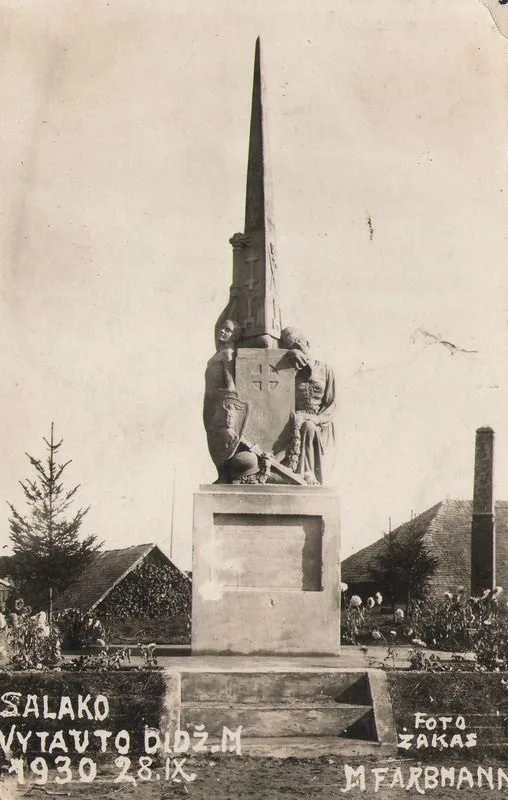
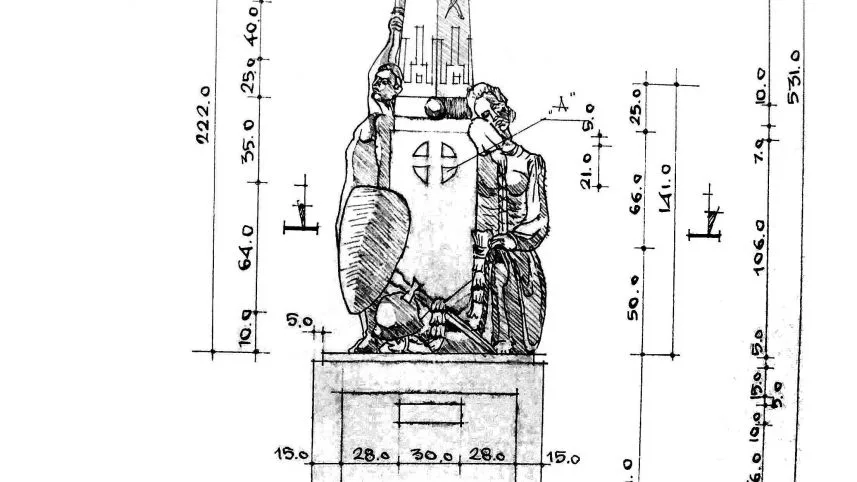
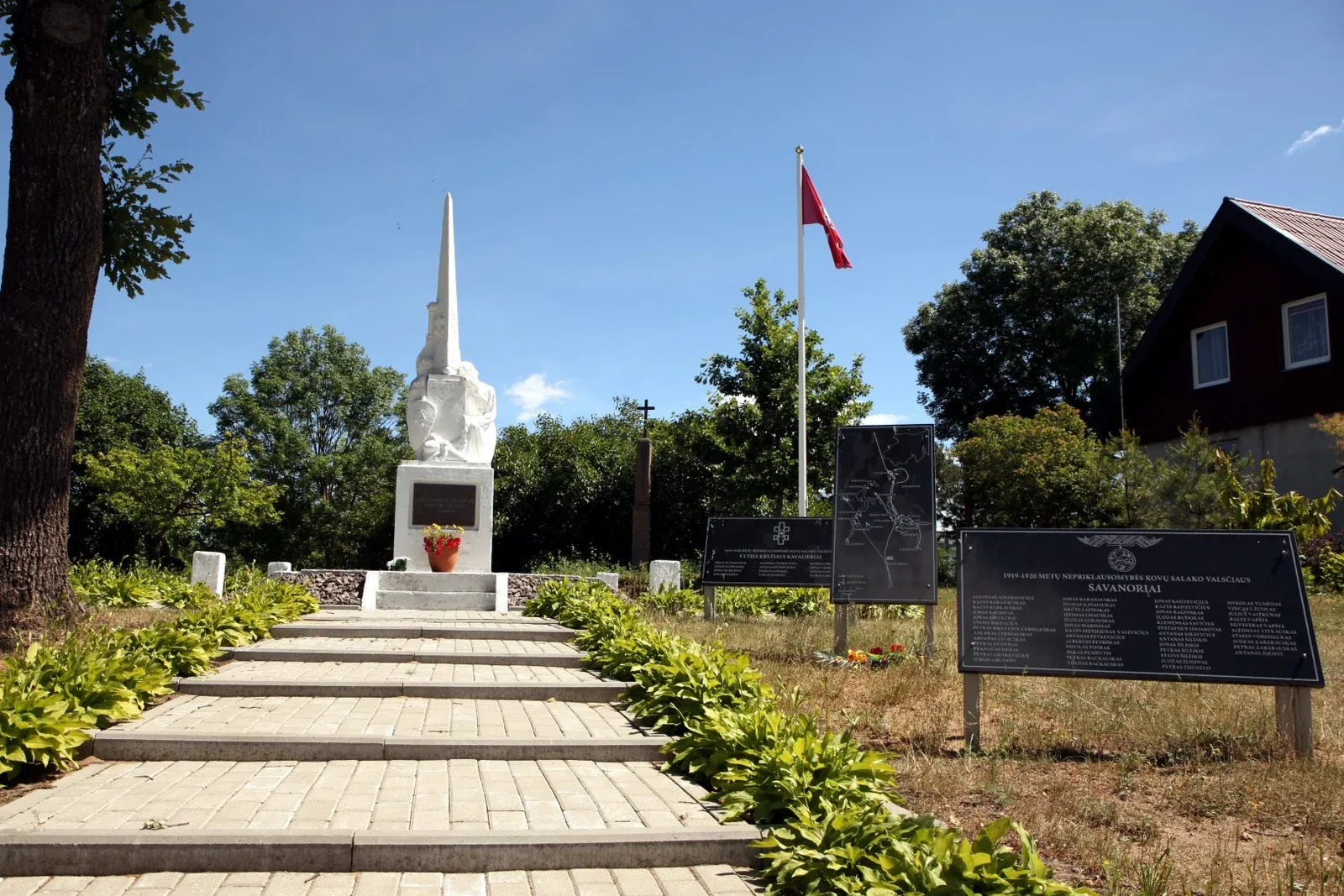
The Independence Monument was erected in 1930 to mark the 500th anniversary of the death of Vytautas the Great. It was created and erected by the Jewish sculptor Maksas Farbmanas (1886–1950), a native of Salakas who became famous in Europe at the beginning of the 20th century. The funds for its construction were provided by Mačius, a pharmacist then working in Salakas. A rectangular pedestal stands on a platform measuring 5.02 x 4.04 m and 0.40 m high, topped by a rectangular obelisk tapering upwards. Beside the obelisk are the figures of a boy with a torch and a woman; residents of Salakas M. Beinorytė and Eug. Šakalys posed for them. The monument, modelled in clay, was coated with oil and covered with a thin layer of plaster, then cut into parts and assembled on the pedestal. A bottle containing the date of construction, information about the builders, the conditions and a few coins was placed under the monument. On 28 September 1939 the monument was solemnly unveiled and consecrated. A young oak was planted on each side of the path, named “Vilnius Tree” and “Oak of the Nation's Leader”. The Vilnius oak has survived to this day. After the 1918–1920 Wars of Independence, a cemetery was established here for volunteer soldiers who fell in 1919 liberating Salakas from the Bolsheviks (Pvt. J. Martinonis, Pvt. P. Bobinas and Pvt. A. Savukas fell near Salakas; the Lithuanian volunteer Aleksas Katinas, who fell in the village of Biržūnai, and others are also buried here). During the Soviet occupation the volunteers' graves were destroyed, and the monument was “neutralised” by plastering over the national symbols, which were restored in 1988 when the monument was renovated.