Description
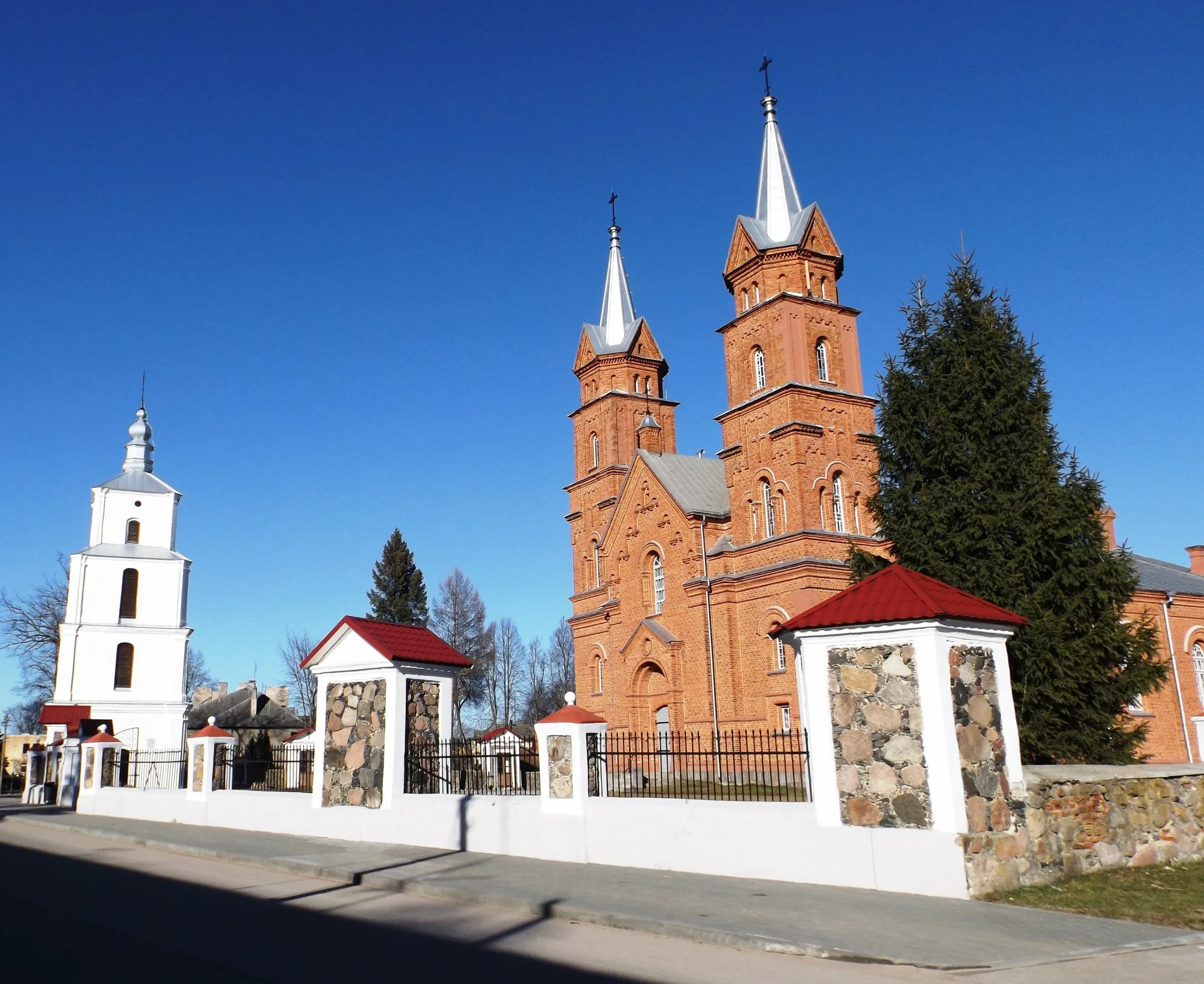
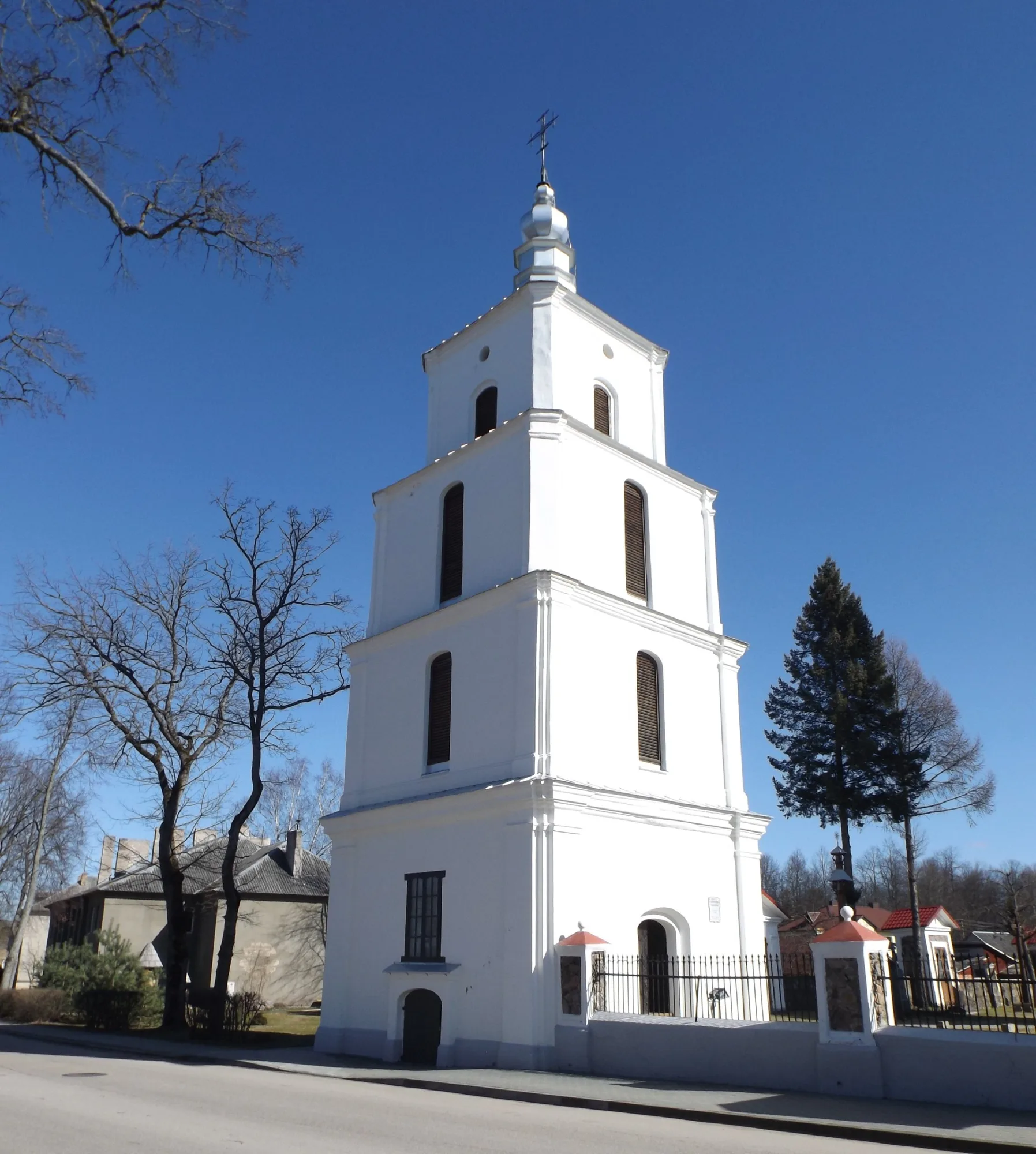
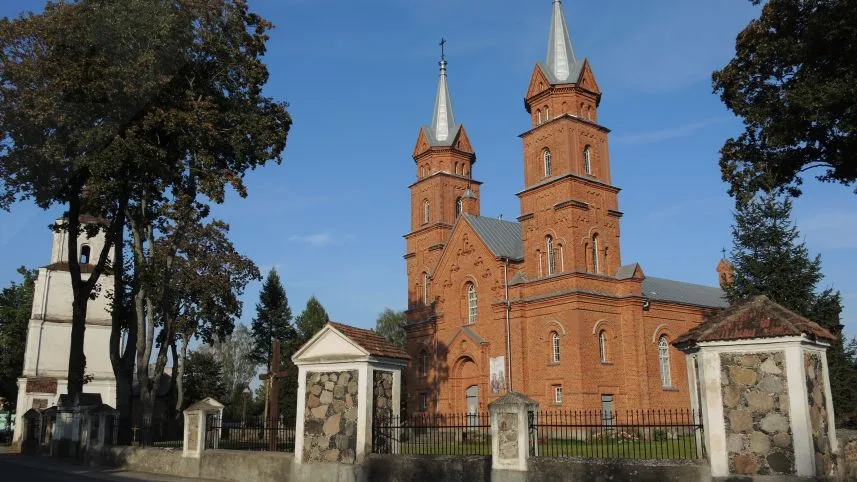
The first church in Dusetos was founded by Jonas Radvila the Bearded (1474–1522) in the first decade of the 16th century and was consecrated in honour of the Holy Trinity, Our Lady of the Snows, the Holy Cross, the Ten Thousand Martyr Knights and All Saints. On 13 January 1520, Jonas Radvila granted the Dusetos church an endowment, transferring land and providing the rectory and its first parish priest, Adomas, with a plot for a house, a garden, a tavern, ponds, a tithe from the Dusetos manor and 12 serfs. By the mid-18th century the old wooden church of Dusetos was in poor condition, so in 1744 Count Jonas Liudvikas Pliateris and his wife Emerencijona Liudvika funded the construction of a new church. The new church was also wooden, rectangular (35 x 14 m) and cruciform in plan, with two towers, 6 altars, a semicircular apse and a fired-brick floor. Above the porch there was a 10-stop organ, in the porch a stone holy water stoup with a seated wooden figure of Christ beside it, and the porch was separated from the nave by a balustraded gallery. The Pliateris family provided the church with new, highly artistic pews and banners with the Maltese cross, bought monstrances, a high altar, a new organ and paintings by Italian artists in Western Europe, and for the main altar Jonas Liudvikas Pliateris obtained the painting “The Blessed Virgin Mary, Queen of Heaven, with the Infant Jesus”, painted by an unknown master after a 1595 copper engraving by the Flemish engraver Johann Sadeler. The silver covers of this 17th-century painting date from different periods and were made in the first half of the 18th century. The church was completed in 1756 and consecrated in honour of the Holy Trinity by the Bishop of Vilnius, Mykolas Jonas Zenkovičius. Around the same time, a four-tier brick bell tower in the late Baroque–early Classicist style was built, which has survived to this day. It is believed to have been designed by the Pliateris family's architect Antonio Paraka. By the second half of the 19th century the old wooden church was in poor condition, so in 1886 parish priest A. Rumševičius initiated the construction of a new brick church (architect Ustinas Golinevičius). As there were no longer any generous benefactors in the area, the parishioners themselves had to raise funds for the construction (some funds were collected in other parishes, reportedly even in Samogitia). The new church was completed and consecrated in 1888. Some relics were moved into it from the old church, such as the painting “The Blessed Virgin Mary, Queen of Heaven, with the Infant Jesus” from the high altar, the tomb monument of Jonas Liudvikas Pliateris and side altars, while the old organ was taken to the Antazavė church and some statues of saints to the Aviliai church. In 1930, to mark the 400th anniversary of the Dusetos church, it was decided on the initiative of Canon P. Strelčiūnas to further decorate the church interior. The work was carried out by Vladas Čižauskas from Šiauliai, a renowned pre-war master of church decoration. Photos by Sartai Regional Park