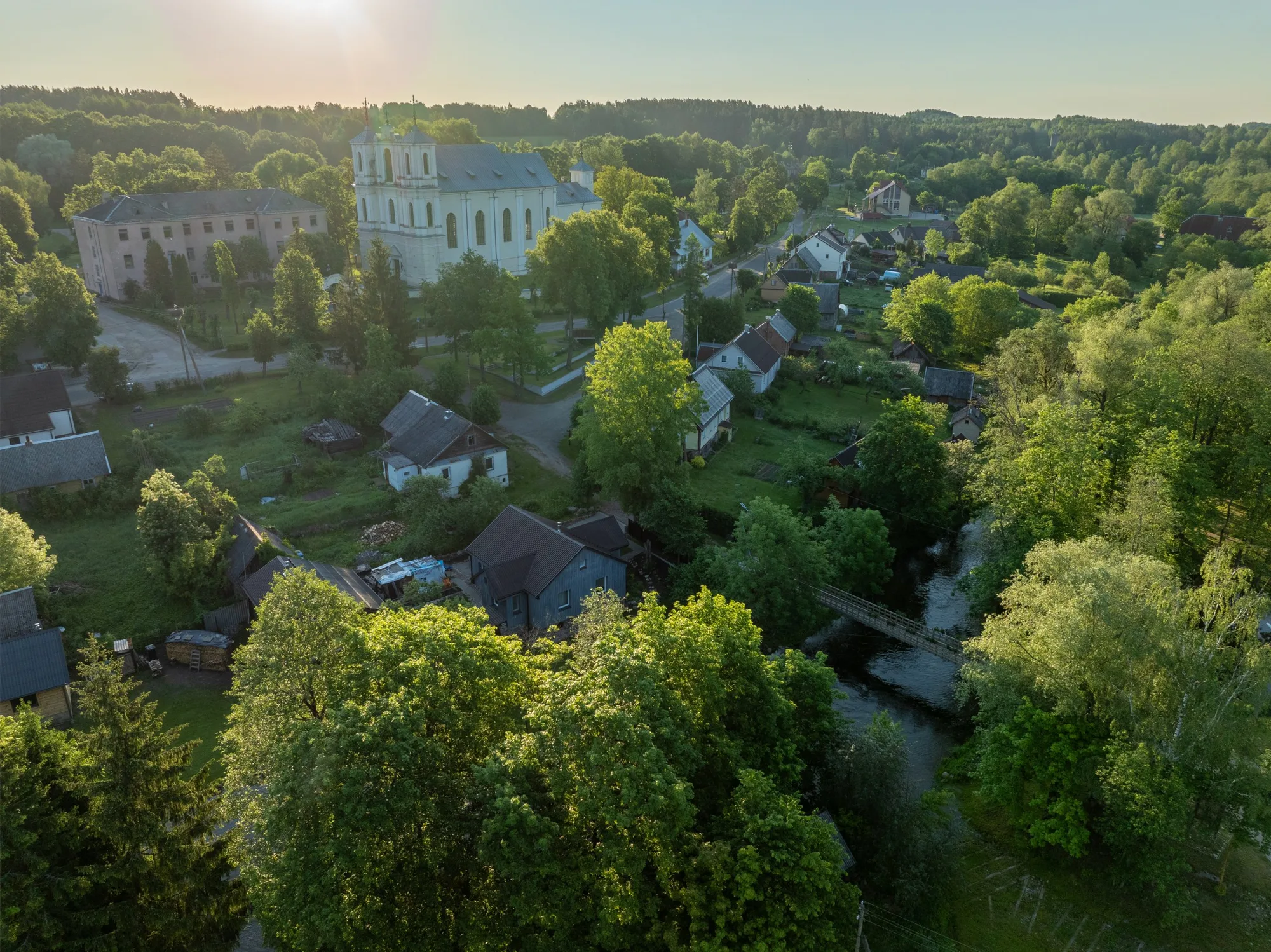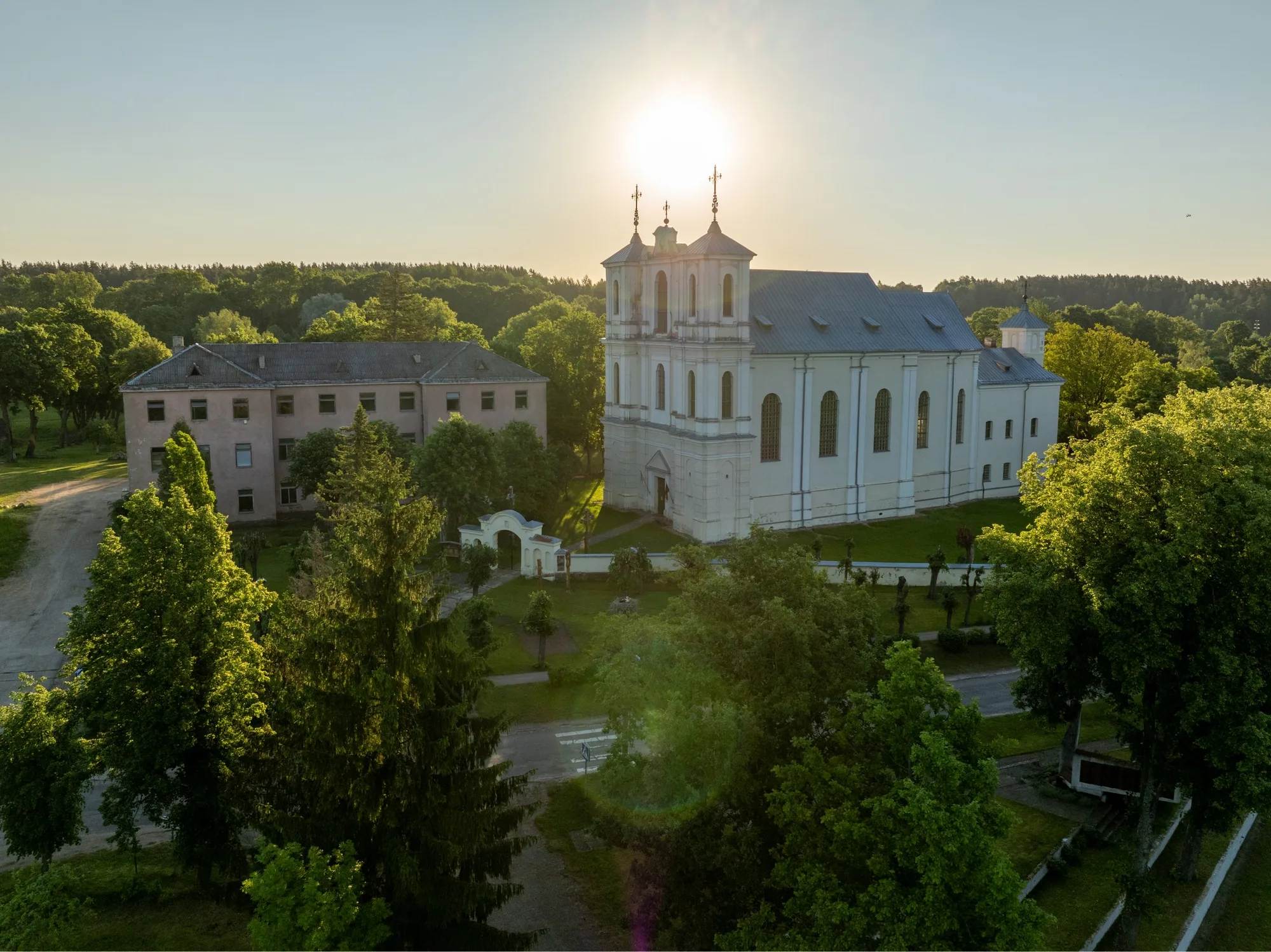
Description
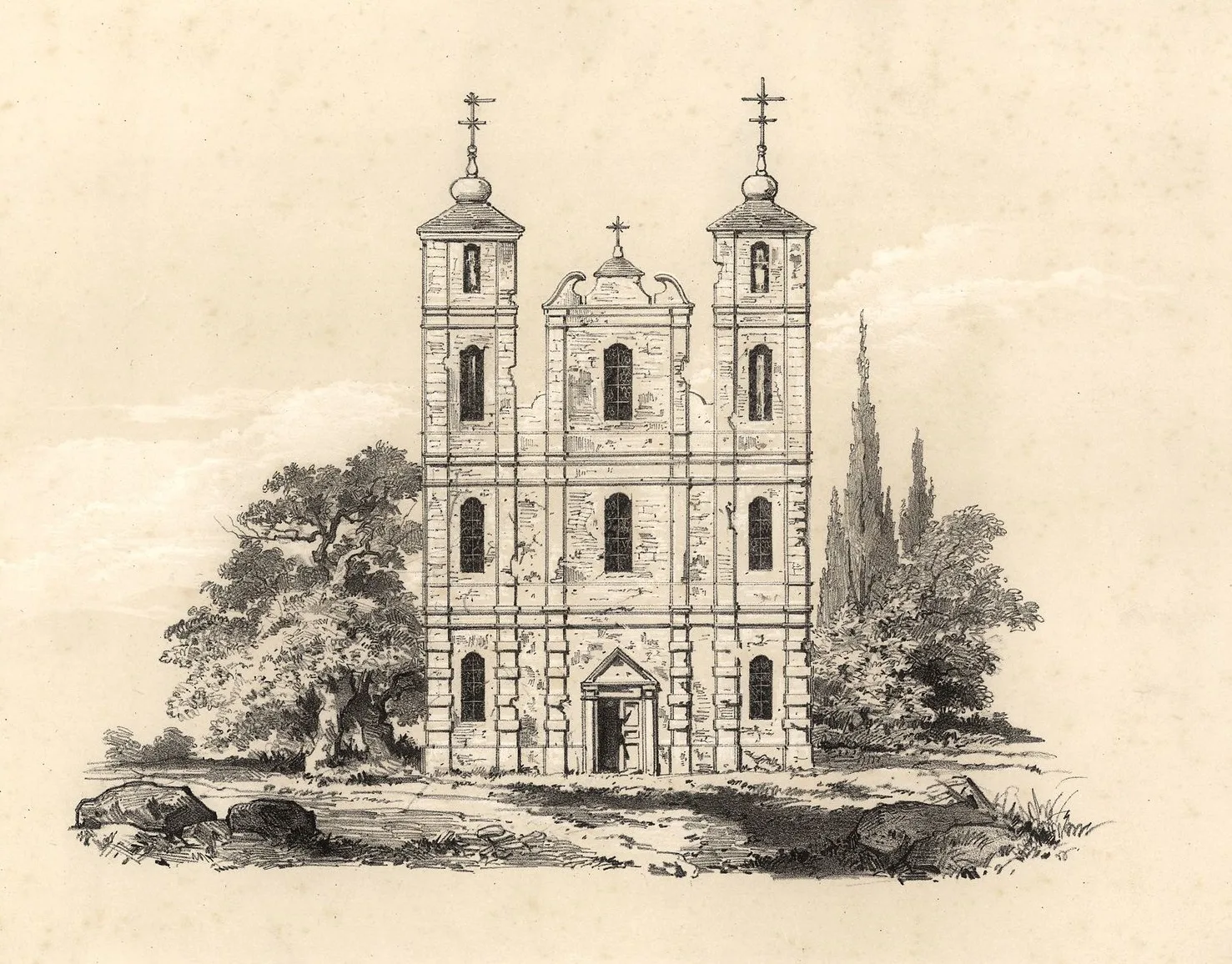
In the second half of the 17th century, Antalieptė belonged to the Balčiai manor of the Strutinskis family. A chapel attached to the Daugailiai branch of the Dusetos parish is mentioned here from 1685. At that time, however, a large village and a small town differed little, since wooden buildings lined the main street everywhere, and the most important feature of a town was the privilege granted by the ruler of the Grand Duchy of Lithuania to hold markets or fairs. In 1713, Jonas Mykolas Strutinskis, elder of Seiviai, Vižainiai and Šakyna, obtained the ruler's privilege for Antalieptė. From then on, markets and fairs were held on Sundays during religious feasts (after Mass) in the square by the church. In 1734, Jonas Mykolas Strutinskis funded the construction of the Antalieptė Discalced Carmelite Monastery, and in 1740 he bequeathed Padustis and the adjacent estates for the upkeep of the future monastery. In 1746, Juozapas Antanas Berlič Strutinskis, lord of the Balčiai manor, and his wife Rožė Pliaterytė began building a single-nave Baroque brick church in Antalieptė at their own expense. In 1763 the church was consecrated in honour of the Finding of the Holy Cross, although construction of the large church was actually completed only several decades later, at the very end of the 18th century. After the 1830–1831 uprising, the town of Antalieptė passed into state ownership, and the monastery grounds were handed over to the Russian Imperial army and converted into barracks, and later into an Orthodox convent. As part of the Russification policy, in 1846–1850 the church was badly damaged and rebuilt as an Orthodox church, which was returned to the faithful only in 1918, when Lithuania restored its independence. Photos by Marius Semaška